Writing: Posts
Everything I have published on rebuilding knowledge work with AI, newest first: 62 pieces so far. Posts react to a source or a week; long reads are the essays.

-
The tasks worked. The job did not.
Epoch AI tested six models on its own work. Where they failed is where most companies run on unwritten rules.
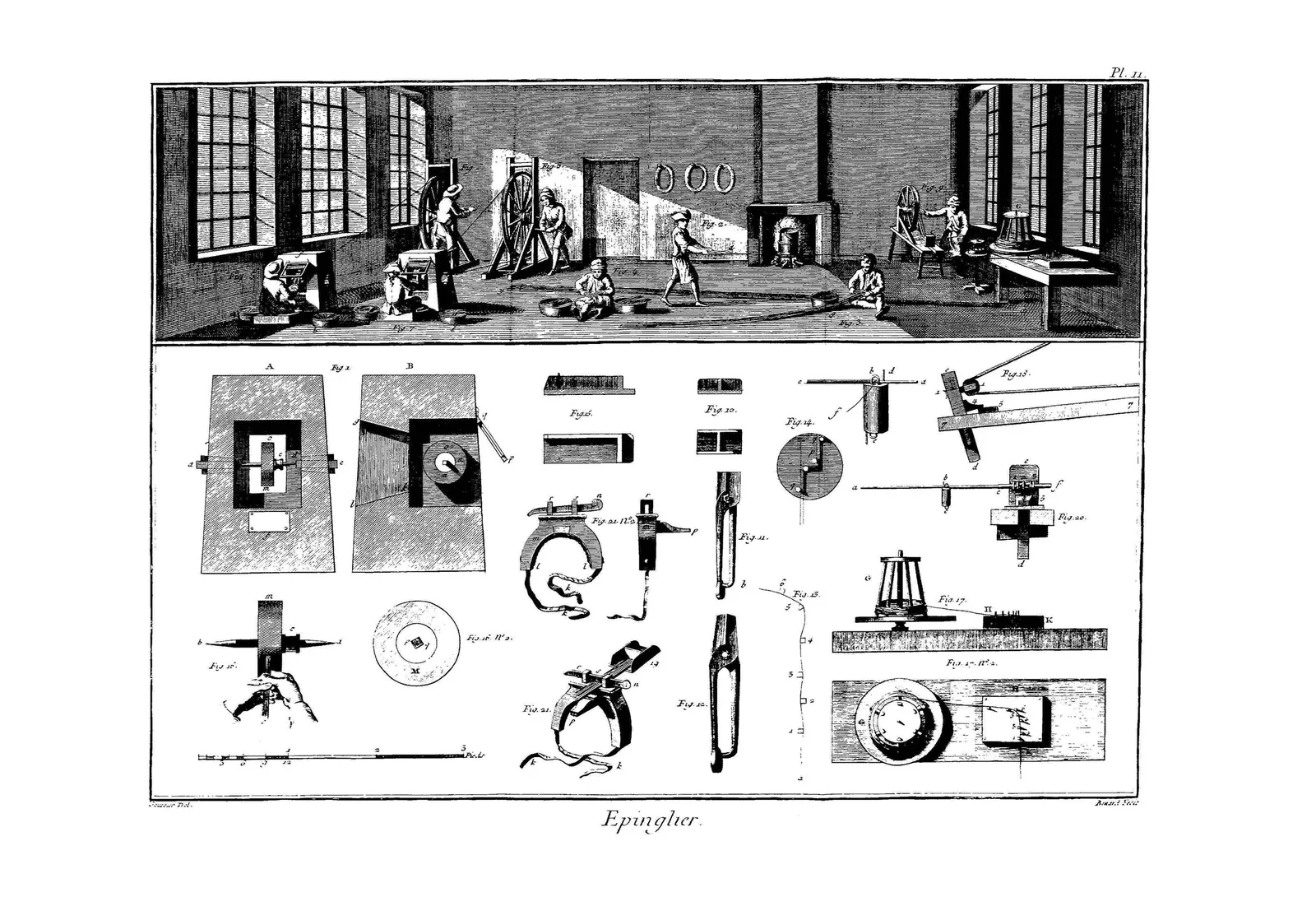
Plate Épinglier, Pl. II, 1763. Credit -
OpenAI's 722 maths papers and the shape of jobs
This week mathematics showed how the shape of many jobs will change, and it happened faster than anyone planned for.
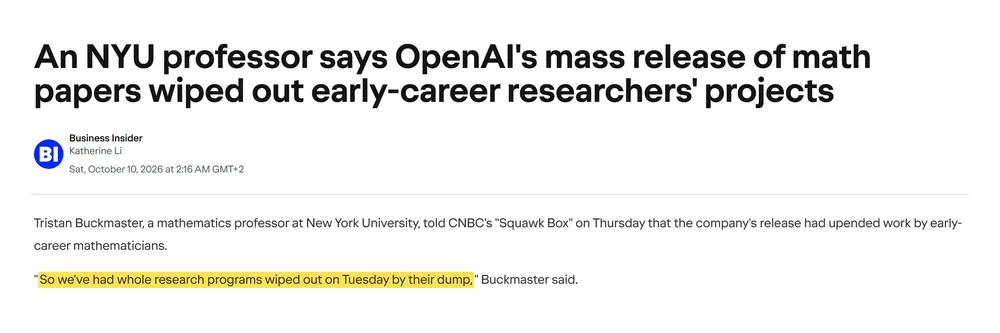
Exhibit Business Insider, 10 October 2026. Source -
The Italian Hackathon League final at OGR Torino
An unusual start to the day: the final of the Italian Hackathon League, at OGR Torino during Wave.
-
FAIR Barcelona 2026: keynote recap
Last Thursday I opened my speech at FAIR Barcelona with a question I have been solving for a while: what would it take to build JARVIS for HR?
-
Everyone becomes a bit of an engineer
Almost everyone who gets serious about AI eventually becomes a bit of an engineer.
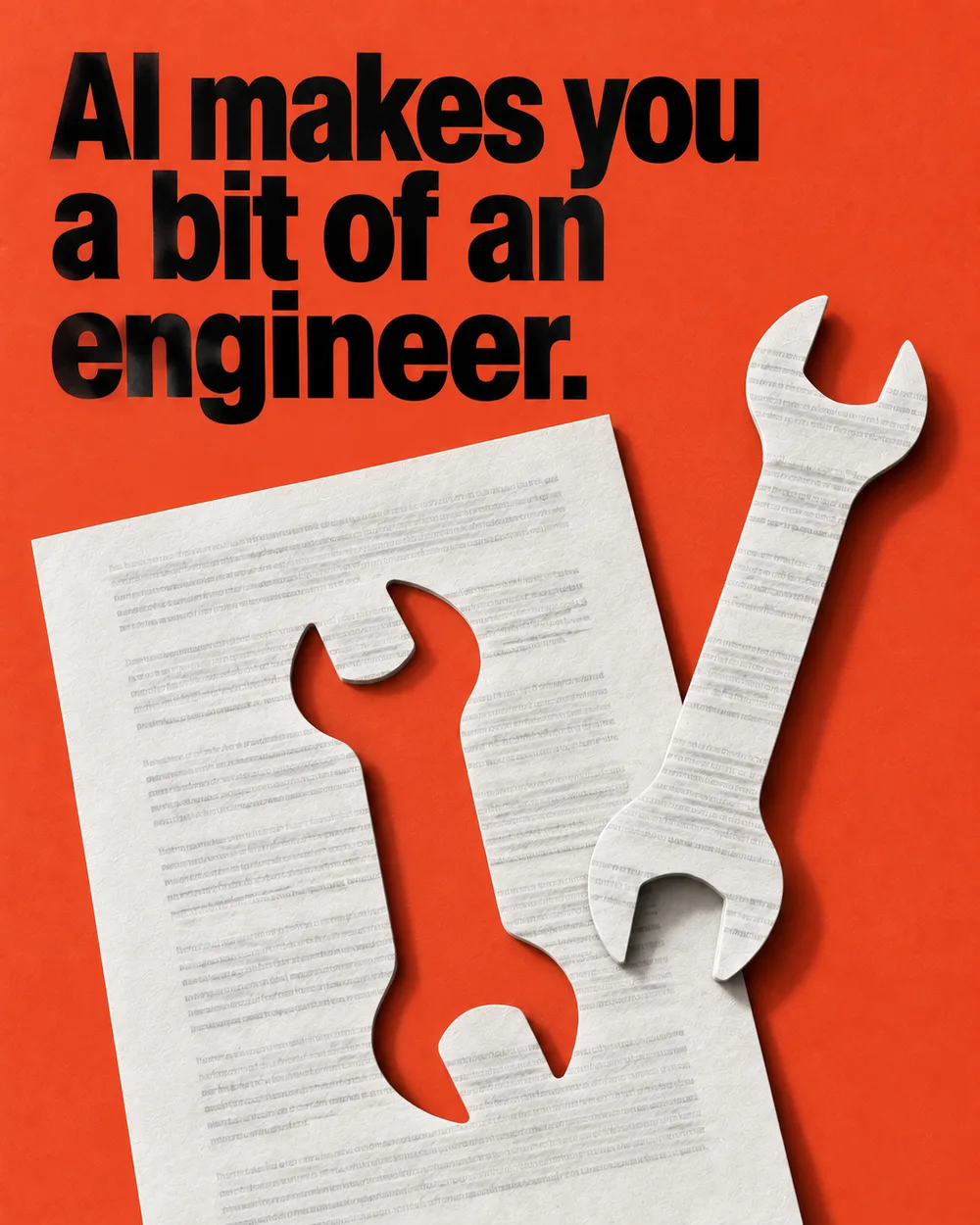
Exhibit Visual from my LinkedIn post. Source -
Twenty supplier offers: where the change AI brings is hard to reach
Fundamental change that AI brings might sound simple, yet it is hard to reach.
-
The more I delegate to AI, the more distilled knowledge is worth
The more work I delegate to AI, the more valuable the knowledge I have taken the time to distil becomes.
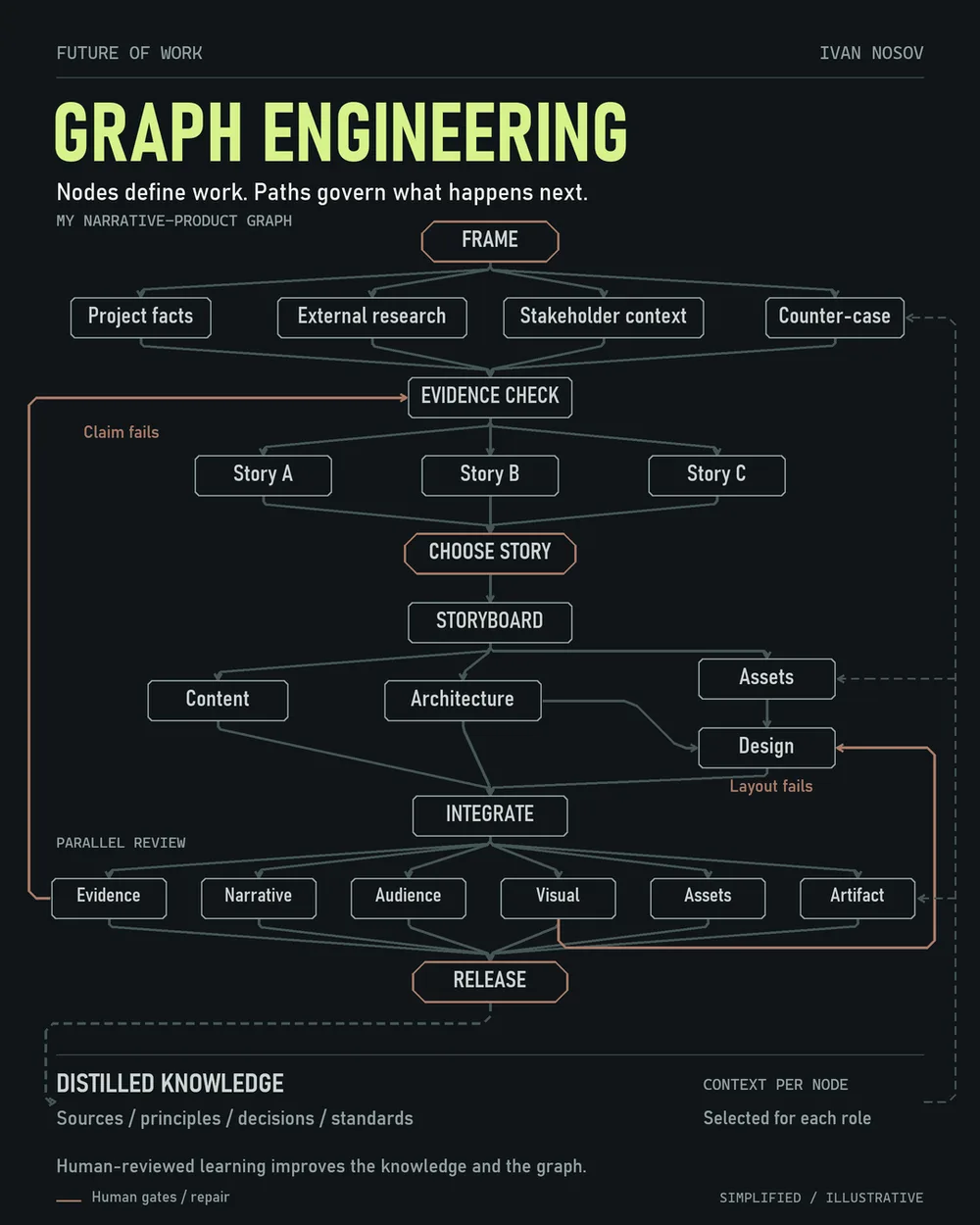
Exhibit Visual from my LinkedIn post. Source -
Databricks as an AI workbench for knowledge work
Databricks became an end-to-end AI workbench for knowledge work. More than 100 knowledge workers now use coding-class agents on it against challenges of HR, Finance, Commercial, and Marketing.
-
OpenAI limits Cursor’s access to its models
Now, this is Big. OpenAI is trying to curb Cursor's growth by limiting access to its models.
-
A watermark on AI text only hurts if AI help is something to hide
Anthropic turned on invisible text watermarking for Claude this month, a way to solve for EU AI Act requirement in force since August 2.

Exhibit Visual from my LinkedIn post. Source -
Every correction to an AI answer is a process rule you paid for
You know the ritual. The first AI's output is too long. The wrong data was used.
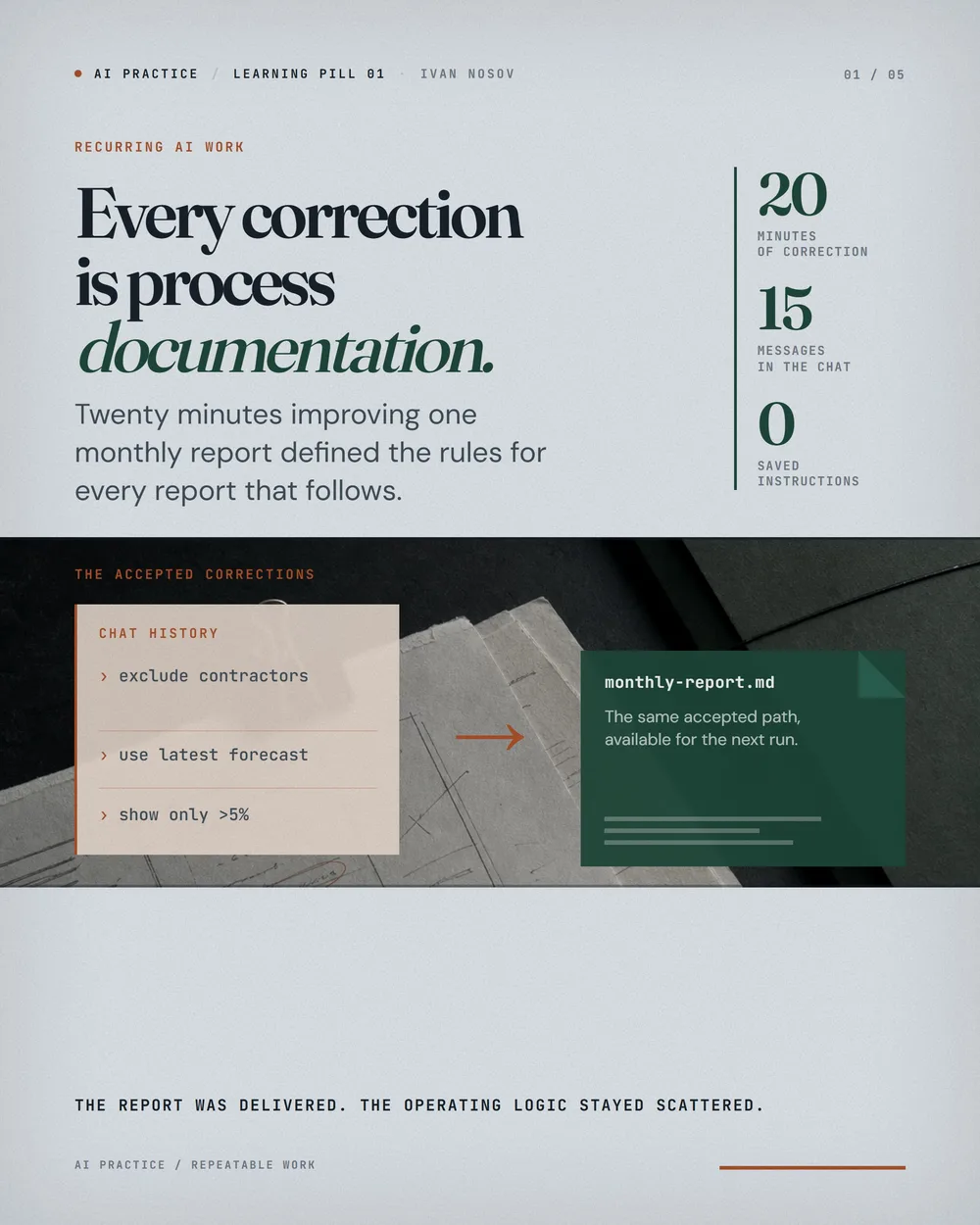
Exhibit Visual from my LinkedIn post. Source -
Microsoft's biggest obstacle to AI ROI may be Microsoft Office
Copilot entered the world’s dominant productivity suite with a distribution advantage nobody else could replicate.
-
Digital transformation now sits in every leadership job
Digital transformation now sits in every leadership job, whether the job description admits it or not.
-
Model rankings shift; my workflows stay provider-neutral
ChatGPT 5.6 is fantastic, Grok 4.5 is the working horse. In tokenomics time - Antropic loses the edge.
-
Start with the output and let it pull the data
The dominant narrative in the feed repeats the same rigid prerequisite: you cannot adopt AI until your data is perfectly clean.
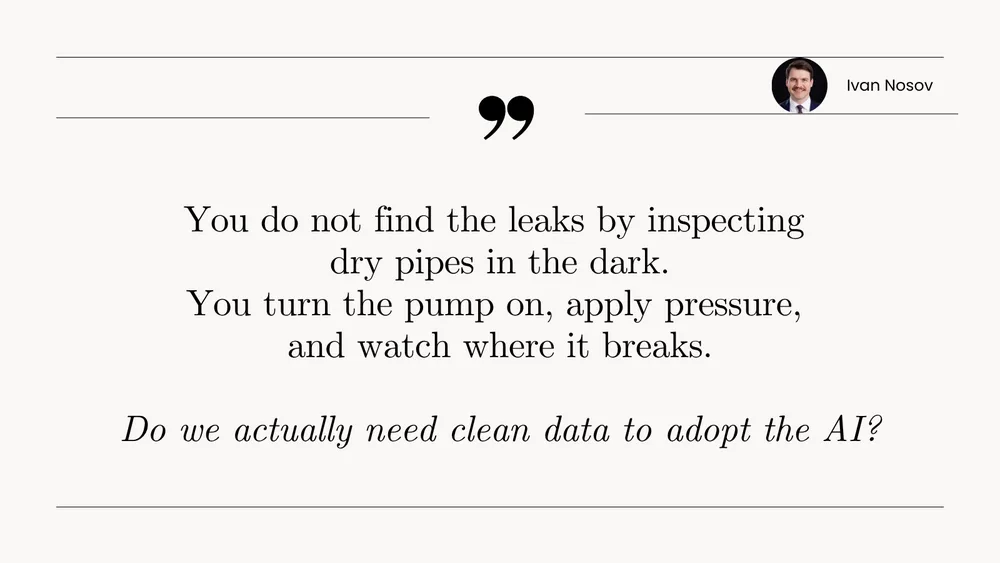
Exhibit Visual from my LinkedIn post. Source -
When processing time collapses, the bottleneck moves to thinking
Giac Soliman had me on the Range podcast on AI adoption in comp and HR - with Pay Equity as center showcase.
-
10% × 10% × 10%: layered checks that make AI errors rare
10% x 10% x 10% = 0.1% error rate. That is the promise behind stable AI work.
-
What 40+ AI reports from March to June 2026 agree on
I ran an analysis on 40+ AI reports and papers released March-June 2026.
-
Two weeks testing Genie Code as a governed AI workspace
I spent two weeks testing Genie Code for the job Databricks undersells.
-
Personal context is the only durable asset in AI
Consistent maintenance of your personal context is the only durable asset in the AI space.
-
AI adoption is loud, but much of it still feels like extra work
AI adoption is finally loud, but a lot of it still feels like extra work, not extra leverage, because most of us are paying a rework tax on generic output, then pretending that is the future of work.
-
Anthropic releases Claude Opus 4.7
Three times the vision resolution of 4.6. More literal instruction following, which means existing prompts may need adjustment.
-
Two Chinese AI labs as an experiment in organisational design
Two Chinese AI labs are running a live experiment on organizational design.
-
Anthropic passes OpenAI in annualised revenue
Anthropic just passed OpenAI in annualized revenue. $30B vs $25B ARR as of April 2026.
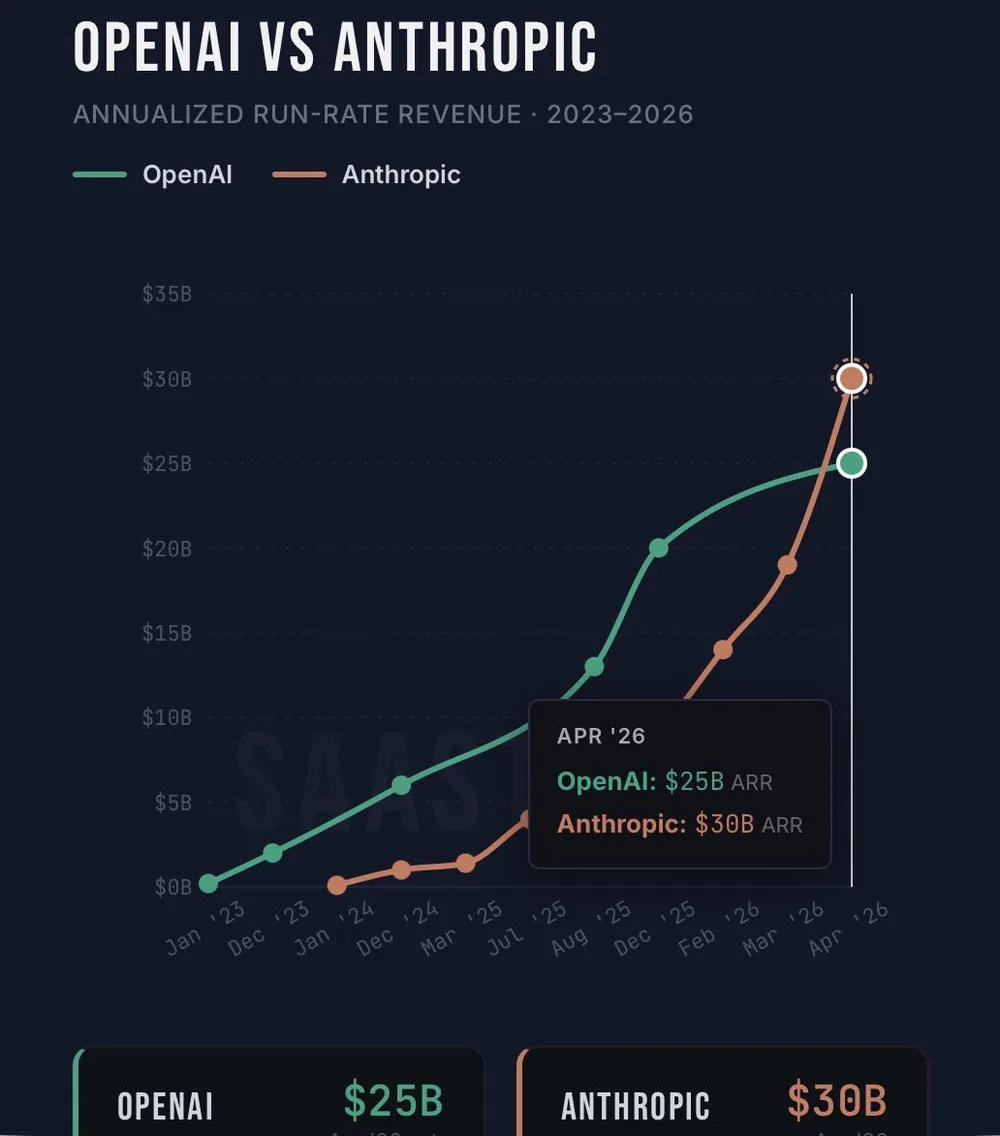
Exhibit Visual from my LinkedIn post. Source -
The play most companies run with AI: hand it to IT
Most companies I talk to are running the same play with AI - hand it to IT, set adoption KPIs, measure how many people opened Copilot this week.
-
Distillation, licences and trust in the AI model ecosystem
The AI model ecosystem right now. Moonshot AI used 24,000 fake accounts and 3.4 million interactions to distill capabilities from Claude into their Kimi model.
-
AI and the Solow paradox
You can see the computer age everywhere but in the productivity statistics" Robert Solow wrote that in 1987.
-
When leaders build with AI themselves
The AI adoption that actually stuck around me started with nobody's permission and no training program.
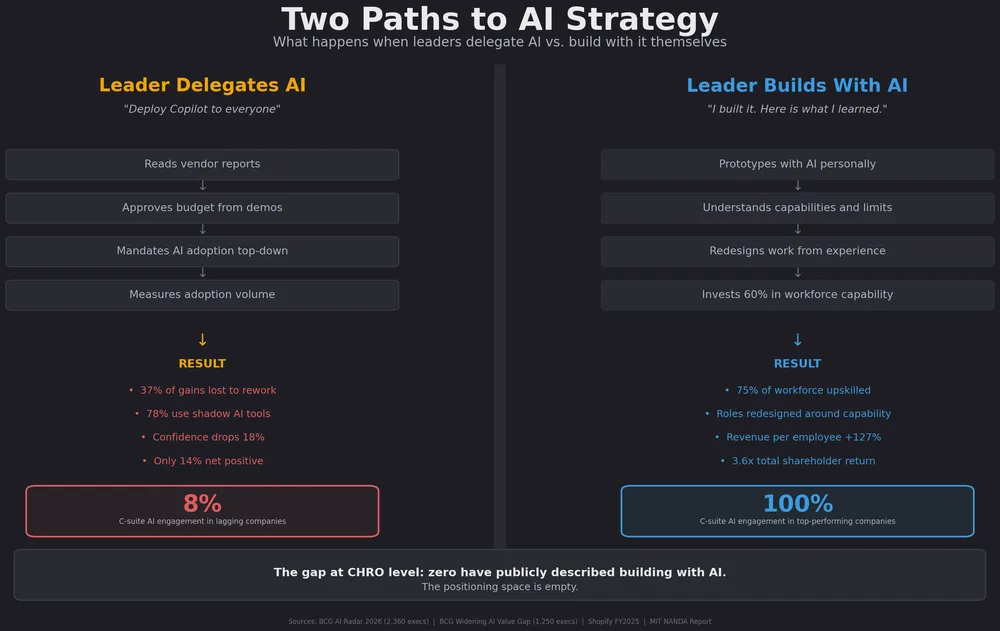
Exhibit Visual from my LinkedIn post. Source -
Microsoft Copilot Cowork at $99 a month
Microsoft just launched Copilot Cowork bundled in at $99/month - AI product built on someone else's engine - then removed the three features that make it work.
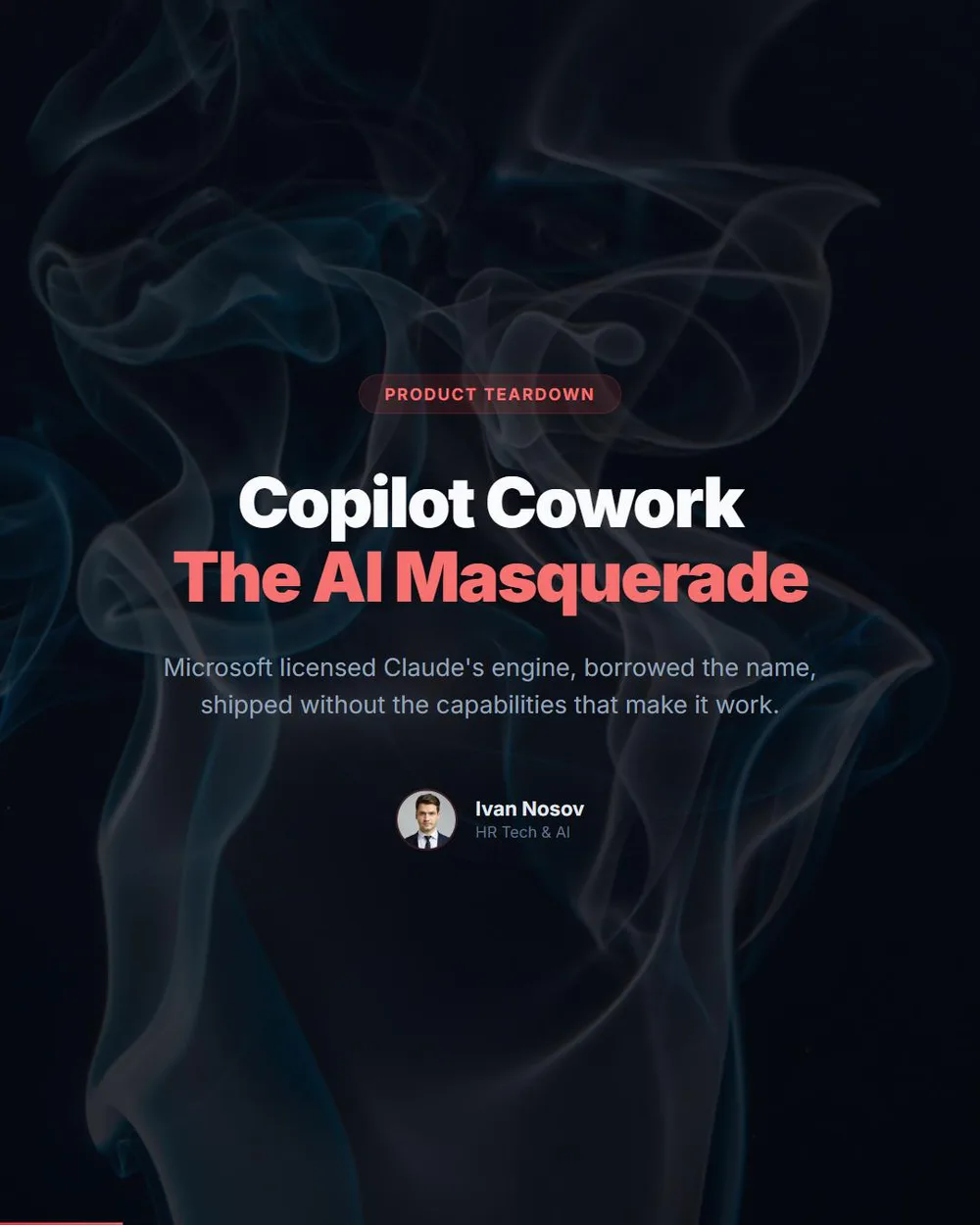
Exhibit Visual from my LinkedIn post. Source -
Software engineering hiring and the Jevons paradox
Software engineer job postings are up 11% year-over-year in the most AI-automated profession on the planet - a textbook case of Jevons Paradox, where making a resource cheaper to use increases total...
-
Most AI training programmes teach people to type
Most AI training programs are teaching people to type. The capability gap is in what they should be writing.
-
Anthropic’s architecture for running HR operations through an LLM
Anthropic just shipped a clean architecture for running HR operations through an LLM.
-
Years of Excel skill, quietly made optional
Spent years getting really good at Excel. Like, genuinely good - it was one of the things that set me apart early in career.
-
HBR: AI does not reduce work, it intensifies it
HBR just published a warning: "AI Doesn't Reduce Work — It Intensifies It" I read it as a confirmation that it's working.
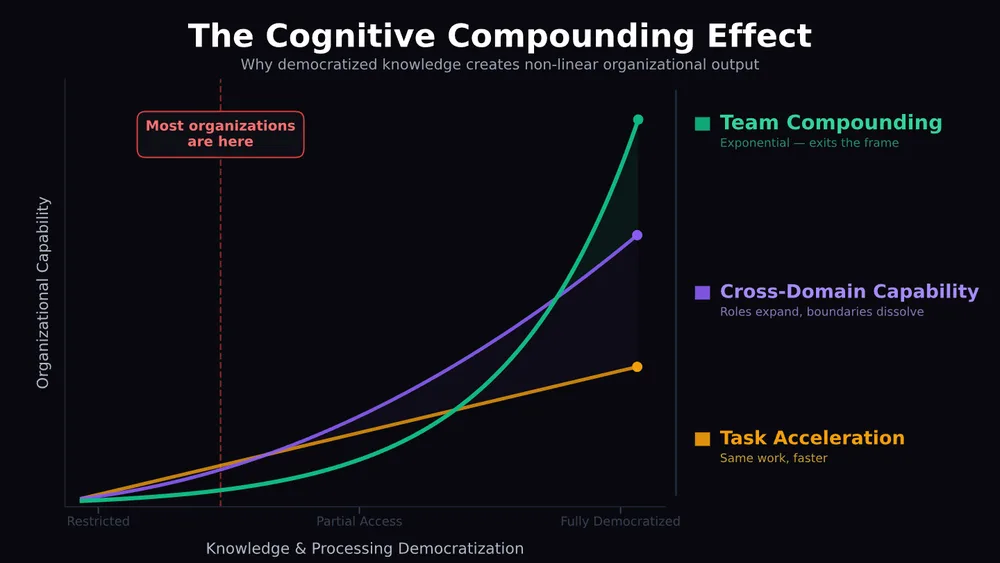
Exhibit Visual from my LinkedIn post. Source -
A 200-line markdown file and $285 billion off the software market
Anthropic published an open-source plugin for Claude - structured prompts, first-year law school content, some workflow logic.
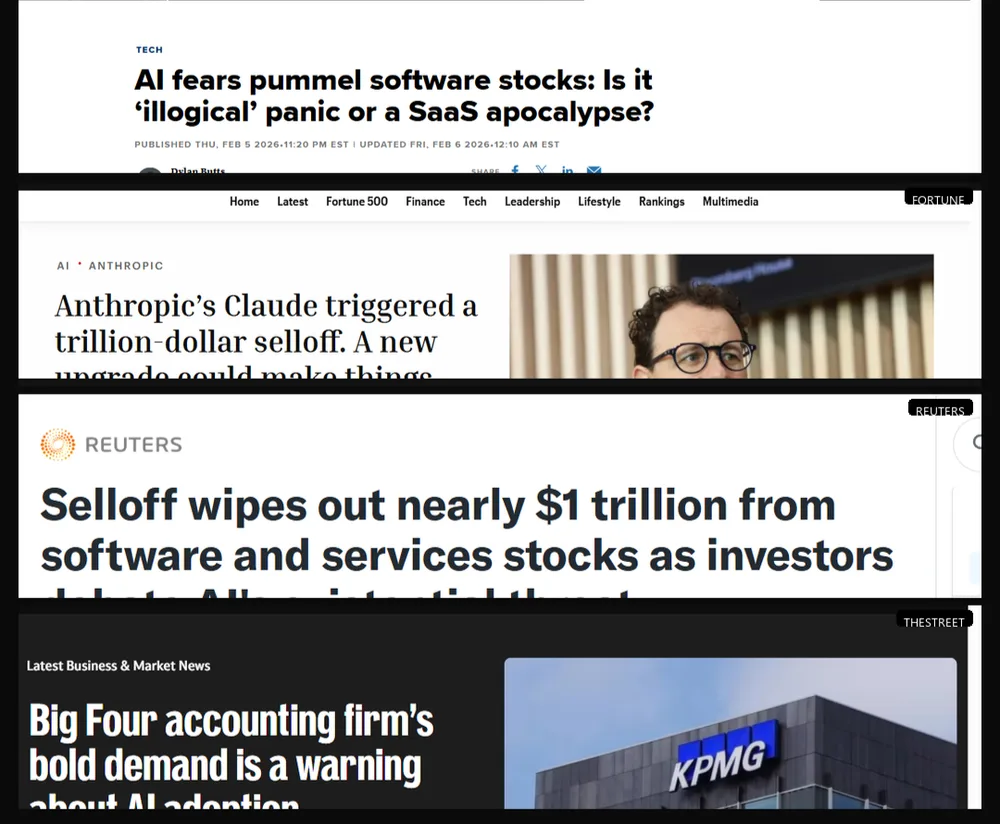
Exhibit Visual from my LinkedIn post. Source -
Software developers rewired how they work in under two years
HR hasn't even started. HR sits on the most AI-compatible raw material in the company - policies, frameworks, guidelines, job architectures, regulatory docs.
-
Knowledge Compounds
What happened after we launched a company-wide AI agent Launched our first AI agent inside the performance management system.
-
Claude Code is for you, not only for coders
Not just for Coders. The most common question: "This is great, but how do I actually set it up?
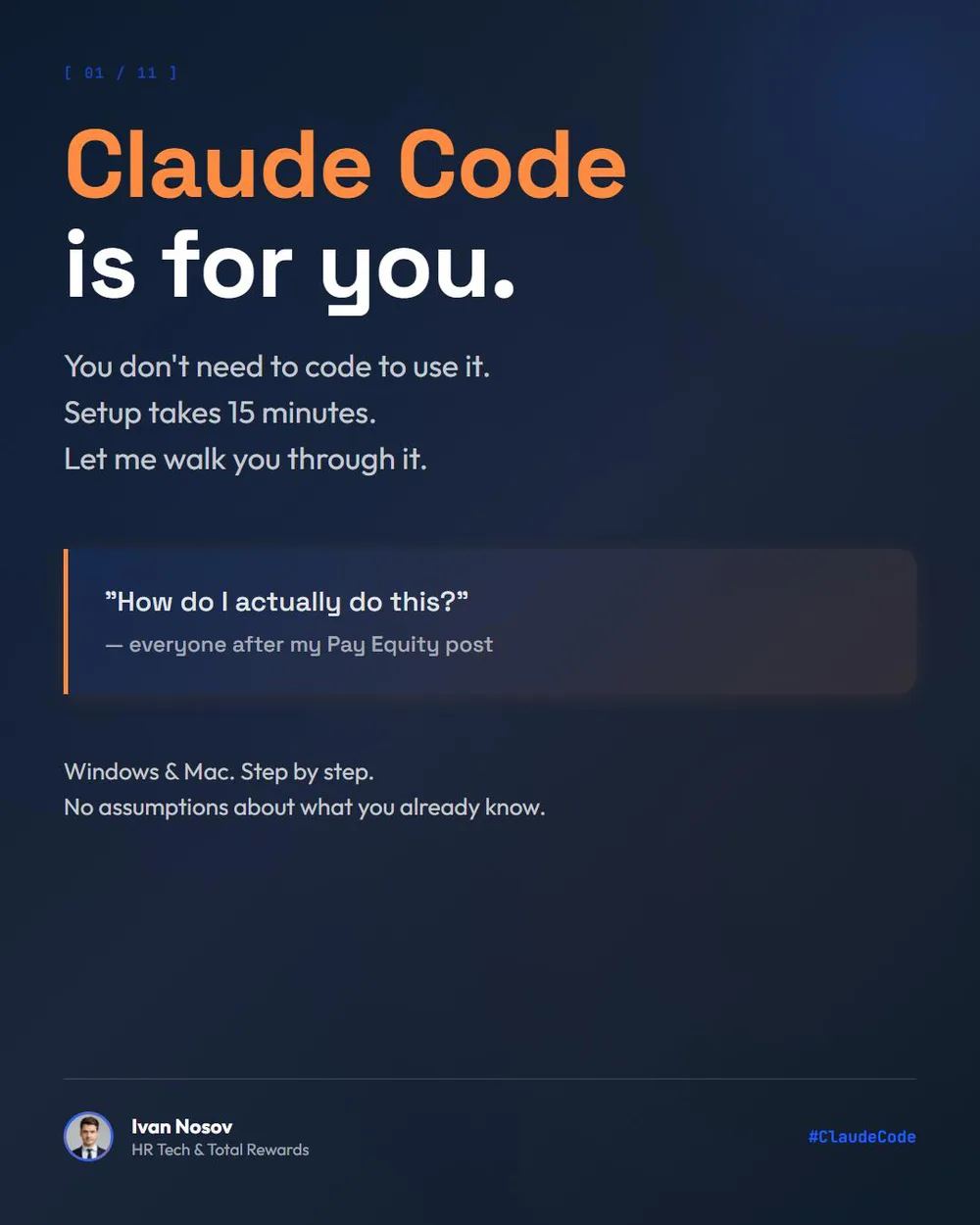
Exhibit Visual from my LinkedIn post. Source -
Pay equity analysis in two hours instead of €50K
Consultants charge €50K for pay equity analysis. I built it with AI in 2 hours.
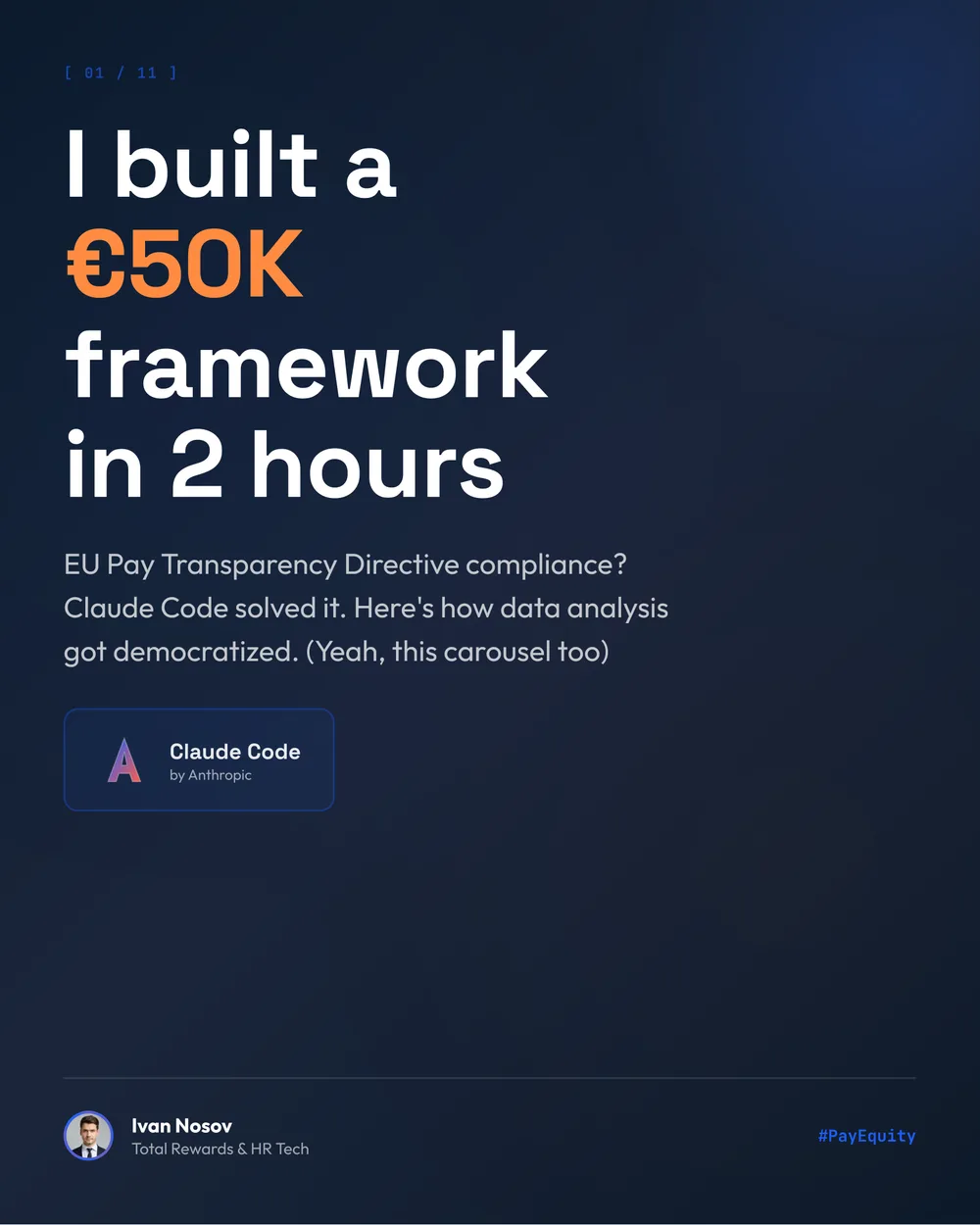
Exhibit Visual from my LinkedIn post. Source -
From Late-Night Deck Crunching to Strategic Thinking
How Claude Code transformed my workflow from late-night deck slavery to strategic thinking Large part of my job involves creating presentations, documents, and compelling stories. of time spent on...
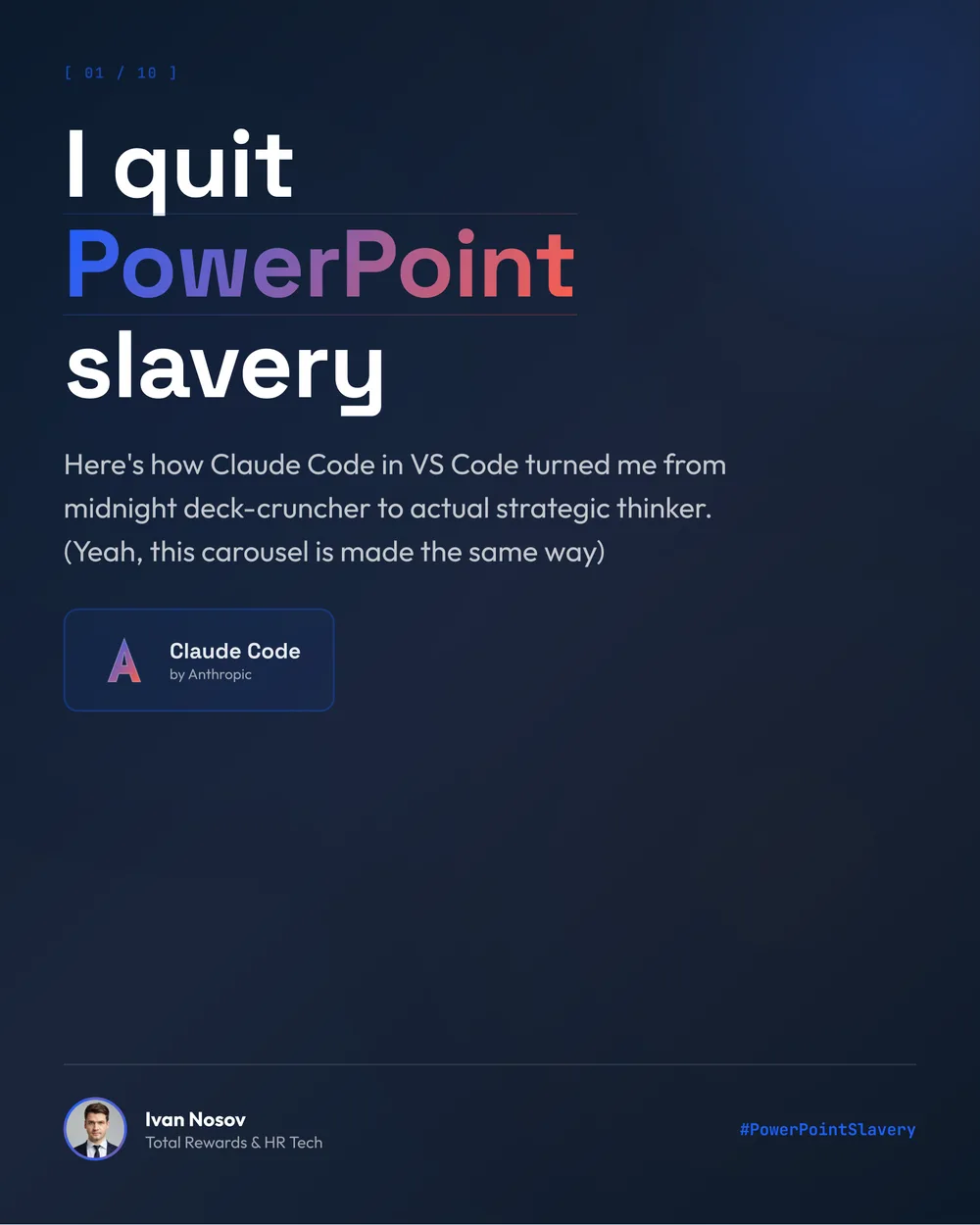
Exhibit Visual from my LinkedIn post. Source -
2025: the year HR started coding
2025: The Year HR Started Coding Birds aren't supposed to swim. HR people aren't supposed to build.
-
Employees are assets: true or false?
Had a moment of surprising freeze during an Accounting Basics review today.
-
Karpathy’s march of nines
One concept from Andrej Karpathy's latest interview that I take as a large takeaway is The "March of Nines".
-
Your AI just created more work and called it productivity
Congratulations! Your AI Just Created More Work (And Called It Productivity) Let's talk about the elephant in the server room: we're drowning in AI-generated nonsense, and we're calling it innovation.
-
Rumelt’s Good Strategy/Bad Strategy and the Nvidia example
Years before the AI gold rush made it a household name, Richard Rumelt’s classic, "Good Strategy/Bad Strategy," pinpointed Nvidia as a textbook example of brilliant strategy.
-
The barrier to AI transformation is not technology or budget
It's imagination and desire. I recently spent a bit of time building something that helps to solve initial steps in Skills Management complexity.
-
What sits behind “AI layoffs”
The phrase "AI Layoffs" sounds terrifying, doesn't it? When Salesforce CEO Marc Benioff recently said he cut 4,000 jobs because he "needed less heads", it made me wonder what's really going on behind...
-
Is Google the dark horse of generative AI?
I've been exploring their latest models and had a shot at a number of deep researches with Gemini 2.5Pro, and their video generation Veo.
-
Retrieval as an answer to the knowledge crisis
RAG AI: The Savior for Knowledge Crisis Retrieval-Augmented Generation (RAG) brings one Simple Promises: Transform your existing knowledge into your favorite AI's thoughts.
-
The 95% AI failure rate, and making the 5% count
I'll Make Those 5% Count and Scale It Forward Fresh MIT NANDA research dropped in July with an uncomfortable truth: 95% of business GenAI initiatives deliver zero ROI.
-
ChatGPT 5: why the launch fell flat
ChatGPT 5: The Hype Fell Flat - Here’s Why Is ChatGPT 5 the game-changer we were sold, or just a shiny letdown?
-
Fifteen minutes to build what HR has been overthinking for years
15 Minutes to Build as HR What You've Been Overthinking for Years I've heard countless variations of "I wish we had a tool that could..." followed by resigned acceptance that IT priorities don't...
-
Three and a half charts for a total rewards career
The 3.5 Charts That Will Save Your Total Rewards Career (And Your Sanity) After years of drowning in compensation analytics, I've made a simple discovery: 90% of our questions can be answered with...
-
Why centres of excellence keep failing
Centers of Excellence solutions consistently fail - why is that? I think I found some ground for the approach I've been trying to implement with MIT's help.
-
Why the average employee can never get average rewards
The Zero-Sum Confession: Why Your "Average" Employee Can Never Get Average Rewards There's a moment in every merit cycle when the math stops being friendly.
-
The most useful tool I have found for decision making
The most powerful tool I've discovered for improving decision making? Transparency.
-
Nobody actually wants data
They want permission with a spreadsheet attached. Continuing my 15-year compensation confessions...
-
Nobody plans to become a compensation professional
It's something that happens to you, like getting caught in the rain or developing strong opinions about Excel formulas (the look of horror when seeing VLOOKUP instead of XLOOKUP in 2025... 😱).
