Week 37 · 2026 · Post
The more I delegate to AI, the more distilled knowledge is worth
The more work I delegate to AI, the more valuable the knowledge I have taken the time to distil becomes.
That is what connects two things I am building: a personal knowledge platform and a way of organising AI work through graph engineering.
 Open full-size exhibit
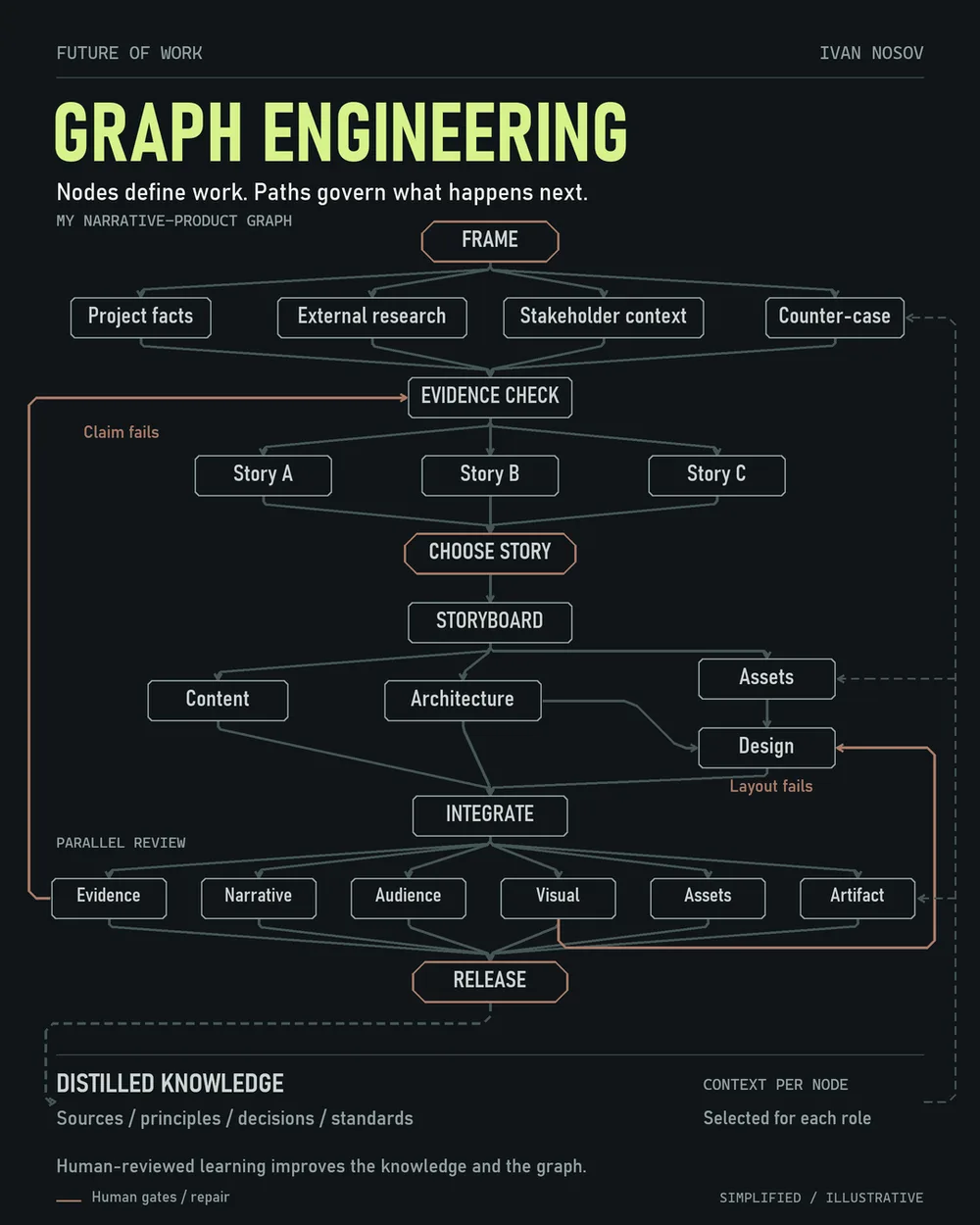
 Here, graph engineering means turning a process into an executable network of tasks. Each node defines an assignment, the knowledge and tools it needs, and the conditions for completion. The connections govern dependencies, parallel work, handoffs and routes for repair. Human decision points define where the system must stop.
The graph gives the work a structure. My personal knowledge platform supplies its substance: experience, research, decisions and corrections distilled into reusable principles, evidence, examples and standards of judgment.
Distillation takes work. It means deciding what a source actually supports, separating a durable principle from a one-off situation, preserving the reasoning behind a decision, connecting related ideas and keeping them current. Those choices determine what an agent can use without asking me to reconstruct the context each time.
The connection between the two layers matters. A researcher gets relevant sources and evidence rules. An editor gets my reasoning principles, audience context and voice. A reviewer gets criteria for challenging the result. Each assignment receives the knowledge it needs, while independent research stays open to conclusions I might not prefer.
My narrative-product workflow is one example. It develops research and a counter-case separately, compares storylines, builds the chosen direction and checks the result. I used it for this post. An unsupported claim returns to evidence; a broken layout returns to design. The correction has an address.
I keep developing both layers through use. A correction may expose missing knowledge, a weak instruction or a faulty handoff. Reviewing it can improve the knowledge base, the graph, or both. More autonomy depends on that continuing work of curation, testing and judgment.
For HR and the future of work, the implication is substantial. Expertise has to become usable beyond the person holding it, while accountability remains clear. Functional experts, HR and technical partners have connected responsibilities in making that possible.
Designing AI work increasingly means designing how professional knowledge is captured, applied, challenged and improved.